Wirehaired Dachshund Dog Breed: Info, Pictures, Facts, Traits, and More
A Comprehensive Guide to the Wirehaired Dachshund: History, Traits, Care and More
Introduction
Dachshunds are one of the most iconic and recognizable dog breeds in the world, known for their elongated bodies, stubby legs and big personalities stuffed into compact packages. Among the different coat varieties of dachshund, perhaps the most distinctive is the wirehaired dachshund. With a spunky bearded face and a wiry coat, these little dogs have loads of character. But there‘s a lot more to appreciate about wirehaired dachshunds beyond just their good looks. Let‘s dig deeper into what makes this dachshund variety so special.
The History of Wirehaired Dachshunds
To fully understand wirehaired dachshunds, we need to start with the origins of the dachshund breed as a whole. The name "dachshund" comes from German words meaning "badger dog", giving a clue to their original purpose. Dachshunds were developed in Germany starting in the 1500s to be fearless, tenacious hunters of badgers and other den-dwelling animals like foxes. Their long, low bodies allowed them to squeeze into burrows and tunnels while their large chests gave them lung power for stamina. Smooth-coated dachshunds were the original variety.
It wasn‘t until the late 1800s that both the long-haired and wirehaired varieties of dachshund were developed. Wirehaired dachshunds in particular were created by crossing smooth dachshunds with various terrier breeds and wire-haired pinschers that gave them their distinctive coarse, thick, bristly coats. The wirehaired coat proved advantageous for hunting, providing protection from thorns and rough undergrowth.
As with many other breeds, both World Wars and the anti-German sentiment they stirred impacted the dachshund‘s popularity, especially in the United States. But the breed bounced back in the 1930s and 1940s and remains well-loved to this day, with the wirehaired variety having a dedicated following among dachshund enthusiasts. While dachshunds of all coat types still have a strong prey drive, they are now mostly companions rather than hunters.
Wirehaired Dachshund Characteristics and Temperament
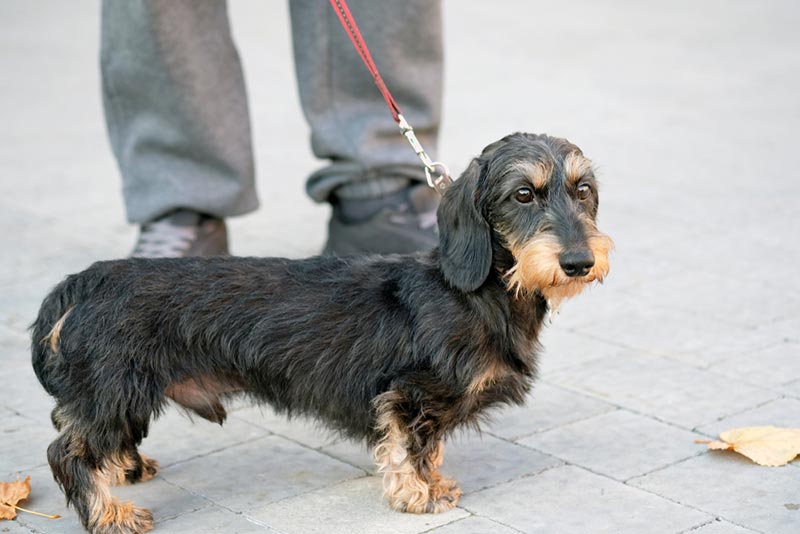
So what makes a wirehaired dachshund unique compared to the smooth and long-haired varieties? The most obvious difference is of course the wirehaired coat, which is thick, hard, and bristly, with a softer undercoat. Unlike the sleek smooth coat or the soft and sometimes silky long coat, the wirehaired is rough to the touch and has an unkempt appearance. Furnishings around the eyebrows, beard, and legs are typical and give wirehairs an alert, lively expression.
Wirehaired dachshunds also tend to be slightly larger than their smooth-coated cousins. While all dachshunds are bred in either standard (16-32 lbs) or miniature (under 11 lbs) sizes, wirehairs are more commonly standards. Their snouts are also usually a bit longer than smooth dachshunds. However, wirehaired minis and smaller snouts do occur.
In terms of coloring, wirehairs come in the same spectrum of colors and patterns as the other varieties according to breed standards – red, black and tan, chocolate and tan, wheaten, and more. A pattern unique to wirehairs is a "wild boar" coloring of dark stripes over a lighter base color.
When it comes to temperament, wirehaired dachshunds share many traits with smooth and long-haired dachshunds. They are brave, confident, lively, and affectionate with their families. But wirehairs also have some terrier-like qualities owing to their heritage, such as being more independent, stubborn, and prone to digging, chasing and barking. Some fanciers feel wirehairs have a bit of a softer and less excitable nature compared to the other coat varieties, but a lot comes down to the individual dog.
Like all dachshunds, wirehairs are intelligent and moderately easy to train, but they do have an independent, curious and often willful streak you need to contend with. They won‘t blindly obey commands and need creative, positive reinforcement to keep them engaged. Without enough physical and mental stimulation, wirehairs will make their own fun by being destructive. But with consistent training and clear boundaries, their fiery nature can be channeled productively.
With their background as hunting dogs bred to chase badgers and other small animals, wirehaired dachshunds have a strong prey drive. This means they will instinctively want to chase smaller pets like cats, rabbits and rodents. Careful socialization from puppyhood is required for them to coexist peacefully with other pets. Even with socialization, a strong reliable recall and keeping wirehairs leashed on walks is advisable, as their instinct to chase can override training. They also tend to be suspicious of strange dogs and may not back down from a challenge despite their small size.
Inside the home with their family, wirehaired dachshunds are playful, fun-loving, and affectionate companions. They bond closely with their owners and can even tend towards being overly needy and attached. They don‘t do well with being left alone for long periods and can develop separation anxiety. Wirehairs make excellent watch dogs as they are naturally alert and quick to sound the alarm when someone approaches the house. They are adaptable to different living situations and can thrive in apartments as well as homes with yards as long as they get daily walks and playtime.
Grooming and Care
Wirehaired dachshunds are often touted as being "non-shedding" or hypoallergenic dogs, but this is not entirely accurate. While they typically shed less than smooth dachshunds, wirehairs still lose hair and produce dander that can trigger allergies. No dog is 100% hypoallergenic and even wirehairs may not be suitable for those with severe allergies.
The wirehaired coat does have advantages in being less prone to tangles, mats and picking up debris compared to the long-haired dachshund coat. However, it does require regular grooming to look its best. Wirehairs should be brushed at least weekly with a slicker brush to remove any loose, dead hairs and prevent the coat from becoming unruly or shaggy. Their beard and leg furnishings may need extra attention to avoid matting.
Unlike other coat types, wirehairs don‘t shed out their old coat. Instead, the coat keeps growing and will need to be "stripped" if you want to maintain the proper harsh texture. Stripping involves plucking out the dead hairs by hand or with a stripping knife. This lets new coat growth come in. Many wirehaired dachshund owners opt to have the coat clipped instead, which is lower maintenance but can make the coat softer and less wiry in texture.
Whether stripped or clipped, wirehairs will need grooming by their owner or a professional groomer every 6-12 weeks on average. In addition to coat care, regular nail trims, ear cleanings and dental care are essential for the overall health and comfort of a wirehaired dachshund.
Health Concerns
Wirehaired dachshunds are generally a hardy and healthy breed with a lifespan of 12-16 years on average, but there are certain health issues that they can be prone to. Most notable is their increased risk of back problems, especially intervertebral disk disease (IVDD). This is a condition where the jelly-like cushioning disks between the vertebrae of the spine bulge or burst into the spinal cord space, causing pain, nerve damage and even paralysis in severe cases.
An estimated 1 in 4 dachshunds will develop IVDD in their lifetime. Their long spinal column and short rib cage make them vulnerable to back injuries. Wirehaired dachshunds may have a slightly lower incidence than the other varieties owing to being less elongated, but they are still a high-risk breed. Keeping wirehairs at a healthy lean weight, using a harness instead of a collar, and avoiding high-impact activities like jumping on and off furniture can help lower the risk of IVDD. Being aware of the signs, such as unwillingness to move and hunched back, can help catch it early. Mild cases can be managed with rest and anti-inflammatories but severe cases may require expensive surgery.
Other health problems wirehaired dachshunds may be susceptible to include eye diseases like glaucoma and progressive retinal atrophy, heart disease, epilepsy, hip dysplasia, hypothyroidism, and skin problems. Responsible breeders screen their dogs for known issues in the breed to avoid passing on preventable conditions.
Lifespan and Living Situations
A well-bred, well-cared for wirehaired dachshund can live up to 16 years old, giving you many years of loving companionship. They can adapt well to many different types of homes and owners. Wirehairs can be good for novice dog owners as long as you educate yourself on the breed and are prepared for their quirks. Older, calmer wirehairs can make good companions for seniors. With their small size but big personality, they are well-suited for apartments, condos and city life.
However, a securely fenced yard is ideal to let them have some off-lead exercise as long as you supervise them. Wirehairs typically do well with older children who know how to handle dogs gently and respectfully. They may be too rambunctious and nippy for young kids and can be easily injured if mishandled. Other pets are workable if raised together, but wirehairs may never be fully reliable around small animals. Ultimately, the key to a happy relationship with a wirehaired dachshund is being able to meet their needs and appreciate them for who they are.
Conclusion
Wirehaired dachshunds are a unique and striking variety of a much-loved breed. Developed as tough little hunting dogs, they bring a lot of heart, fire and fun to their families. With their bearded faces and bristly coats, they certainly turn heads and attract a lot of attention. But it takes a dedicated owner to bring out the best in these independent and sometimes challenging dogs.
If you can commit to their grooming, training and exercise needs while embracing their headstrong yet deeply devoted nature, a wirehaired dachshund may be the perfect canine companion for you. Living with one of these special dogs is never boring and your life will be enriched in countless ways by their larger-than-life presence. Wirehaired dachshunds are truly a breed apart and will keep you on your toes and a smile on your face for many years to come.